A bit of science

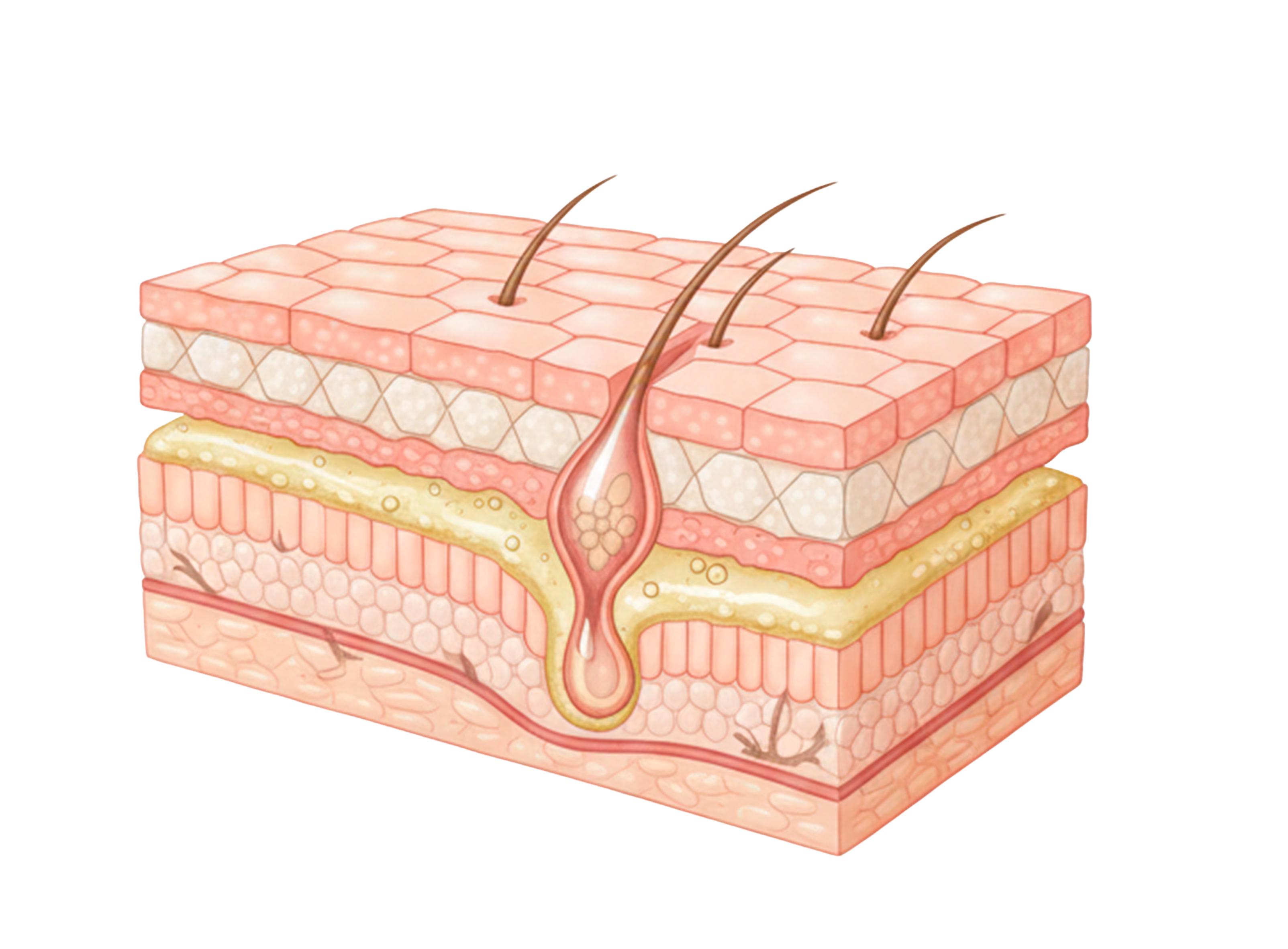
In the skin, triglycerides are primarily found in sebum, a lipid substance that plays an essential role in skin lubrication and protection. Sebum is composed of a mixture of lipids, including wax esters, free fatty acids, and cholesterol, which together form the skin’s protective hydrolipidic film.

Over time, the skin’s ability to produce an adequate amount of lipids decreases, leading to dryness, roughness, and even cracks. This lipid imbalance results in dehydration and impaired barrier function.
Triglycerides account for 30% to 50% of sebum composition and are made up of saturated and unsaturated fatty acids.

Among the saturated fatty acids, palmitic acid and stearic acid stand out, as they help stabilize the skin barrier structure and maintain its waterproofing function.

Oleic acid, a monounsaturated fatty acid abundantly present in sebum, is key to preserving the barrier function of the stratum corneum. Its ability to enhance lipid layer fluidity promotes optimal absorption of hydroxytyrosol, and it also acts as an effective barrier repair agent thanks to its excellent penetration capacity.

Palmitoleic acid (another monounsaturated fatty acid) plays an important role in ceramide synthesis, which is essential for skin integrity.

Linoleic acid (a polyunsaturated fatty acid) is a key component of ceramides. It helps make sebum less thick and less comedogenic.

All triglycerides play a crucial role in moisture retention. The outermost layer of the skin, the stratum corneum, is highly lipophilic—rich in lipids—which allows it to act as an effective barrier against transepidermal water loss. By maintaining the integrity of this lipid barrier, triglycerides help preserve skin hydration, keeping the skin soft, flexible, and protected against external aggressors.