How can the antioxidant efficacy of a molecule be measured?
There are various systems available, but we have chosen an objective and indisputable assessment model.
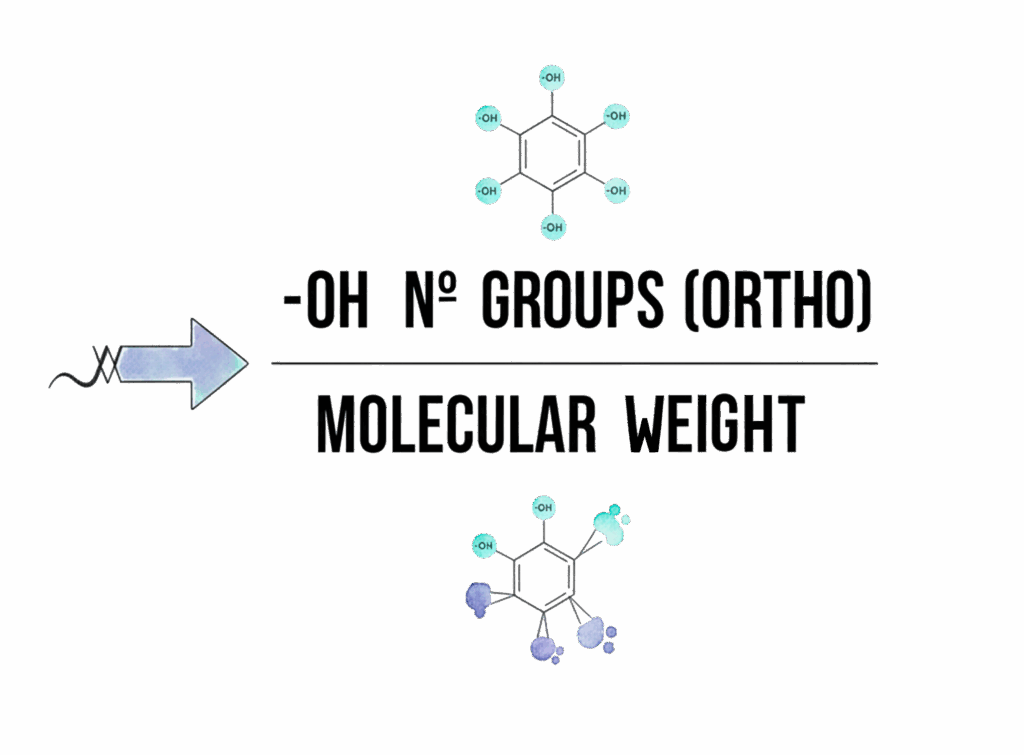
From a chemical perspective, this value is defined by the ratio of hydroxyl groups (–OH) in the ortho position within the molecule to its molecular weight. This ratio is crucial, as it determines the molecule’s ability to act as a true and effective antioxidant.
In simple terms, this ratio reflects the molecule’s ability to capture unpaired electrons—also known as free radicals—which are generated, especially when oxygen is activated under oxidative stress conditions.
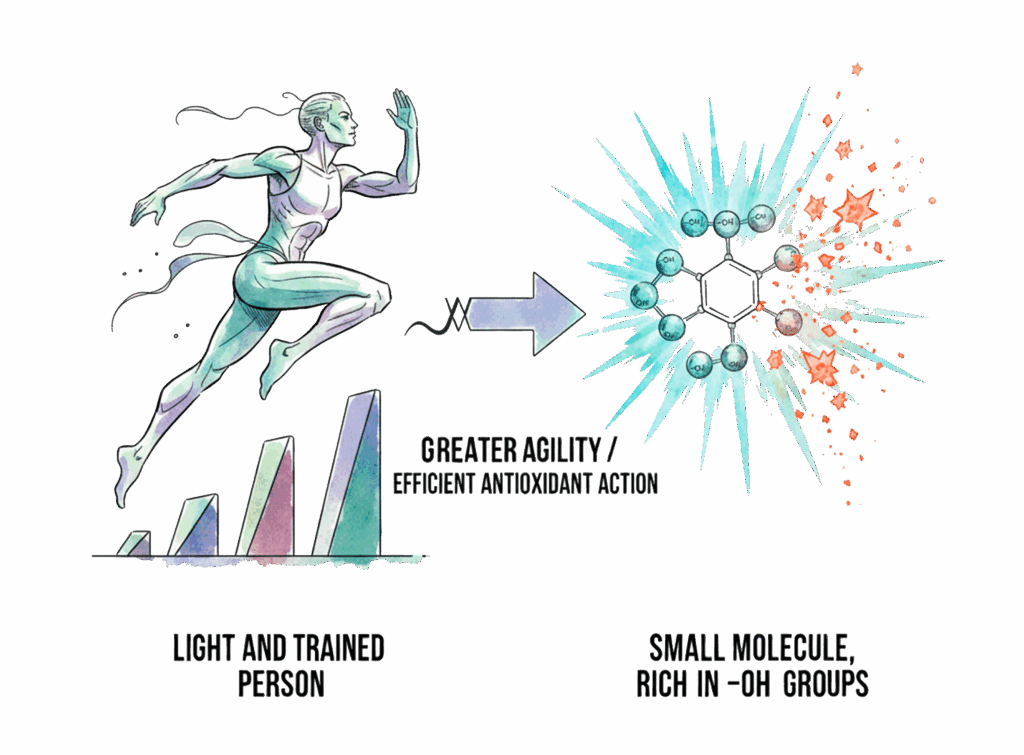
Less weight = More efficiency
To illustrate with an analogy: a lightweight, trained person will always be more agile than someone heavier and untrained. Similarly, a small molecule rich in –OH groups is far more efficient in its antioxidant action.
Hydroxytyrosol embodies this efficiency: it is possibly the “lightest” and most effective molecule known in the plant world. Its high relative electronegativity, combined with its low molecular weight and 100% natural origin, make it a unique compound. Moreover, it is obtained through sustainable physical processes, without the use of chemical solvents, further enhancing its biological and environmental value.
This low molecular weight allows for greater absorption and mobility within membranes and tissues.
Let´s compare…
MOLECULE
-OH GROUPS IN ORTHO POSITION
MOLECULAR WEIGHT
REMARKS
Resveratrol
None
228,25 g/mol
It is a metahydroxyphenol
Astaxanthin
None
596,84 g/mol
It is a xanthophill carotenoid
Epicatechin
2
290,26 g/mol
It is a flavanol
Vitamin C
None
176,12 g/mol
It is an acid; neither phenol nor ortho-diphenol; lower antioxidant activity